Fundamentally transforms the labor profile of a construction project. This transition yields substantial economic and logistical advantages:
* Studies suggest a potential for labor cost reductions ranging from 50% to over 80% for the structural shell compared to conventional methods.
* The necessary human effort shifts towards specialized roles such as system operation, quality control, and digital design.
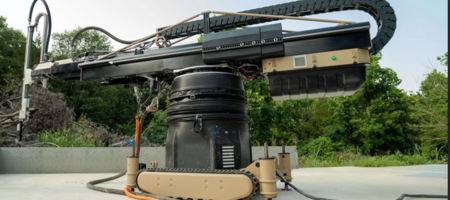
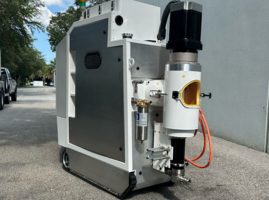
The automated nature of 3D printing enables the rapid deposition of material layers, significantly reducing the time required for structural shell completion compared to conventional construction methods. This *reduction in project duration* can lead to a quicker realization of housing solutions.
Operational costs are often lowered through several mechanisms: a *reduction in labor requirements* due to automation; minimized material waste resulting from the precision of the additive process; and the potential for a more efficient supply chain.
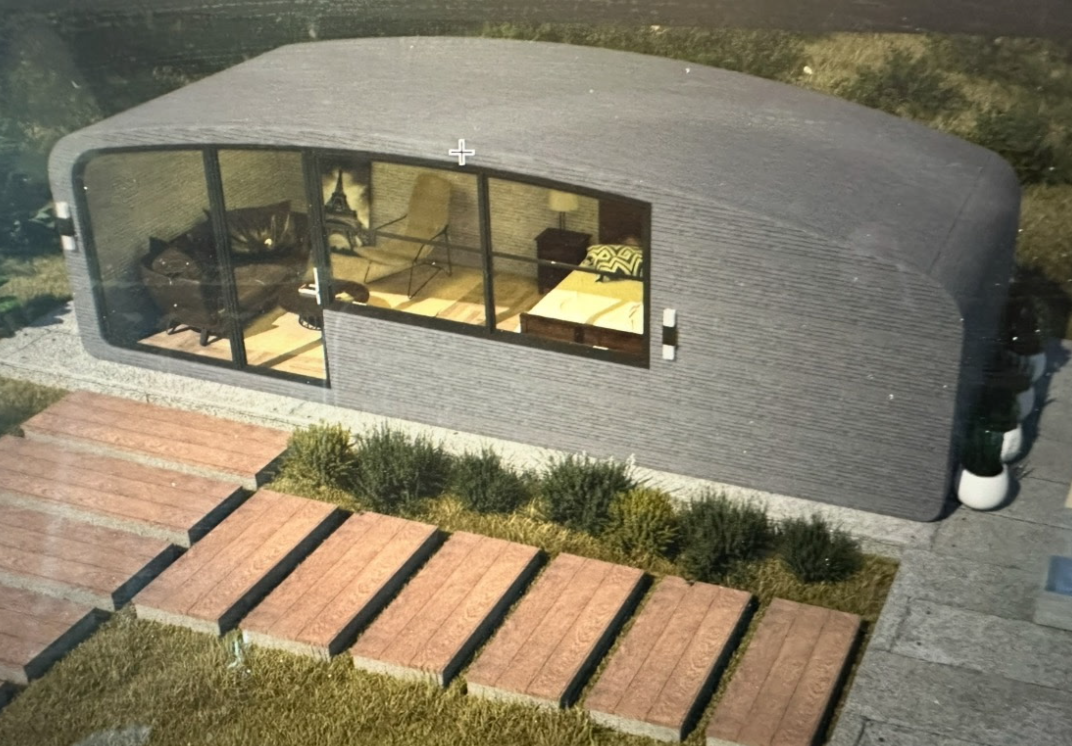
AC processes allow for the facile construction of non-standard geometries, including curved walls and intricate features, that are often cost-prohibitive or physically challenging using traditional techniques. This offers *unprecedented architectural freedom* and personalization.
As an additive process, 3D printing only deposits material where structurally required, in stark contrast to subtractive or form-based methods. This leads to a substantial *decrease in construction site waste*, contributing to environmental efficiency.
The ability to print structures as continuous, seamless monolithic units can eliminate weak points associated with conventional joints and seams. Furthermore, the technology allows for the precise integration of internal lattices or insulation channels, potentially enhancing the *thermal and mechanical performance* of the structure.
By shifting a significant portion of the heavy lifting and material handling from human laborers to automated systems, 3D printing can *improve construction site safety* and mitigate risks associated with manual processes.
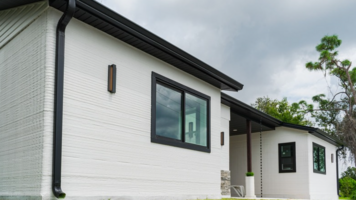
Using 3DCP UAF students created a 1,500-square-foot home in Nome under wind gusts up to 45 miles per hour and freezing temperatures, along with freezing rain and sleet. Farzadnia noted that Alaska has incredibly short construction seasons and a lack of skilled labor, not to mention the extreme weather that the state is known for.
The UAF students helped in the research and engineering of a 3D-printed building in Nome, Alaska, according to Alaska's News Source, as part of the Nome3D-Printed Home Project. The printer utilized materials like silt, glacial till, and clay to develop an alternative concrete that was high-strength and freeze-thaw-resistant.
An additional benefit is that it can utilize local materials, cutting down on the cost of resources and limiting the environmental damage of harvesting things like wood from around the world. The construction industry accounts for 38% of the world's pollution, per Science Direct, so finding alternatives like 3D printing can help reduce that impact.
The technology also has potential for future use on the moon, which has similarly barren conditions as the far reaches of Alaska. But the benefits to humans here on Earth are more immediate and well-served by the innovation spearheaded by enterprising students.